IRS Releases New Online Tool
Published April 17, 2026
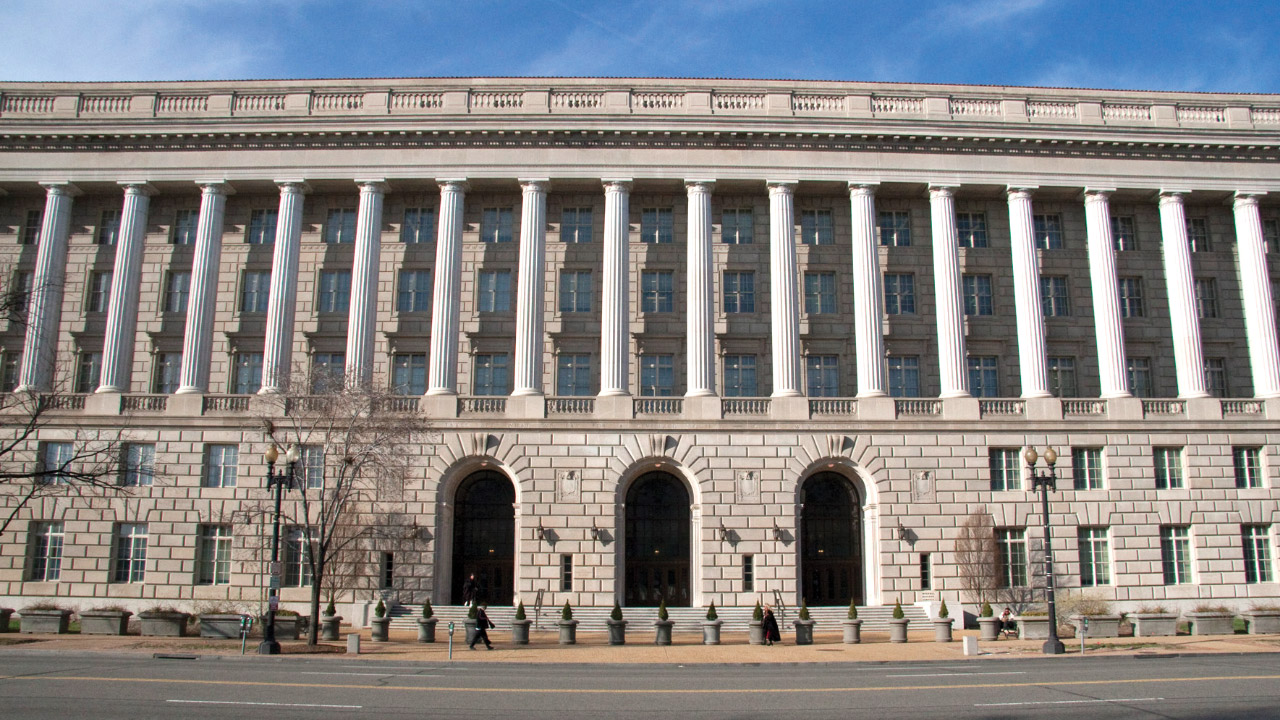
As the April 15 tax deadline has come and gone, the Internal Revenue Service (IRS) launched a new online tool to assist with resolving tax debt. While taxpayers are eligible to file an extension for a deadline of October 15, for most taxpayers, the tax balance remains due by April 15. The IRS released an online Tax Debt Help tool to provide accessible ways to explore payment options.
“This new Tax Debt Help tool reflects the agency’s commitment to making tax compliance clearer, more accessible, and less intimidating for taxpayers, said IRS Chief Executive Officer Frank J. Bisignano. “By guiding taxpayers through their options to pay with simple, interactive questions, we are helping them understand the paths available and take confident next steps. The deployment of this new tool shows the transformation underway at the IRS and the progress the agency has already made to deliver more user-friendly, digital-first services to taxpayers.”
The new tool allows the user to answer questions to determine payment options based on taxpayer eligibility. This tool expands the self-service digital options and is part of the IRS goal of providing expanded digital services.
Multiple options exist to pay tax debt. Taxpayers can use their IRS Individual Online Account to access payment options. Payments may also be made through Direct Pay from your checking or savings account, or by using a debit card, credit card or digital wallet. The Electronic Federal Tax Payment System (EFTPS) is another convenient option, and many taxpayers choose electronic funds withdrawal from their bank account. Other options include a check, money order or cash, although cash payments are more complex and are explained on IRS.gov/paywithcash.
If you are not able to pay your tax due in full, there are both short and long-term payment plan options. A tax bill of less than $100,000 may be paid over 180 days with the short-term plan. If you owe less than $50,000 in tax, penalties and interest, the long-term payment plan may allow you to stretch out payments for up to 72 months.
Partnership Notice Deemed Valid
In Mammoth Cave Property LLC v. Commissioner; No. 5401-24; 166 T.C. No. 4, the Tax Court determined that the Notice of Final Partnership Adjustment (FPA) in a syndicated conservation easement case was timely and valid.
Mammoth Cave Property, LLC, was a limited liability company treated as a partnership for federal income tax purposes and subject to the centralized partnership audit regime enacted under the Bipartisan Budget Act of 2015 (BBA).
Mammoth Cave Property timely filed its 2018 Form 1065, designating Mammoth Cave JV, LLC (MCJV) as its partnership representative and listed its address in Welsh, Louisiana. Subsequently, Mammoth Cave Property filed Form 8979 to revoke MCJV as its representative and designate Mammoth Cave Manager, LLC (MCML) as its new representative under the Welsh address. It also listed Matthew Mills as the designated individual located at a Dexter, Missouri address.
The Internal Revenue Service (IRS) rejected Form 8979 because the employer identification number was not provided. Mammoth Cave Property filed an additional identical form with the required information. The IRS confirmed and acknowledged Form 8979 with an effective date of April 2021. In January 2022, a change of address form was completed to change Mammoth Cave Property and MCML’s address to the Dexter address. The IRS processed that change of address in August 2022.
The IRS initiated an examination of the 2018 partnership return. In July 2022, the IRS issued a Notice of Proposed Partnership Adjustment (NOPPA) to the Welsh address for MCJV, not addressed to MCML. A Final Partnership Adjustment (FPA) was issued in January 2024 to the Dexter address.
In March 2023, Mammoth Caves Property requested an extension to submit the taxpayer modification using the Welsh address, and the IRS noted the Welsh address was used by Mammoth Caves Property as late as June 2023.
The Court found that the 270-day FPA deadline was met under Sec. 6235(a)(2). The 270-day period started on June 6, 2023, and the issuance of the FPA was January 5, 2024, within the statutory period. Despite the existence of flaws on the NOPPA, Mammoth Caves Property was made aware of the NOPPA. The Court held that the designated individual was aware of the NOPPA, and in fact, timely responded to the NOPPA by requesting an extension to file.
The Court found that Mammoth Caves Property “received adequate or minimum notice” which resulted in the ability for the partnership to timely file. There was no prejudice found due to the NOPPA errors. In addition, the address errors were deemed to be cured because the partnership received actual receipt and responded timely to the action.
Nonprofits’ Settlement Protects Confidential Information
In Harvest Church v. Resound Church; No. 1:22-cv-02285, the Court upheld a protective order that prohibited disclosure of confidential information.
The matter involved an ownership dispute between two nonprofit organizations. Harvest Worship Center (Harvest Parties) and Resound Church (Resound Parties) contested the ownership of certain church property. The litigation progressed through discovery. During discovery, a protective order was issued related to certain confidential information being disclosed, which the order prohibited from being made public.
The parties subsequently settled the case and dismissed all claims and counterclaims, with the lawsuit being terminated the following day. The protective order deadlines for returning or destroying confidential information were in effect and approaching, prompting Harvest Parties to file a Motion to Clarify and Amend.
Harvest Parties’ Motion to Clarify and Amend explained that, based on confidential documents obtained in discovery, it believes there is evidence of criminal conduct related to income tax reporting. Harvest Parties requested permission to report the criminal conduct as a carve out in the protective order. The Resound Parties opposed the Harvest Parties’ Motion to Clarify and Amend. Resound Parties contended that the settlement of the case was in reliance on the protective order.
The Court held that allowing disclosure of confidential documents obtained during discovery would undermine principles of fair litigation. Thus, the protective order was upheld.
Applicable Federal Rate of 5.0% for May: Rev. Rul. 2026-9; 2026-19 IRB 1 (16 April 2026)
The IRS has announced the Applicable Federal Rate (AFR) for May of 2026. The AFR under Sec. 7520 for the month of May is 5.0%. The rates for April of 4.6% or March of 4.8% also may be used. The highest AFR is beneficial for charitable deductions of remainder interests. The lowest AFR is best for lead trusts and life estate reserved agreements. With a gift annuity, if the annuitant desires greater tax-free payments the lowest AFR is preferable. During 2026, pooled income funds in existence less than three tax years must use a 4.0% deemed rate of return. Charitable gift receipts should state, “No goods or services were provided in exchange for this gift and the nonprofit has exclusive legal control over the gift property.”